Gemini 4 Argon is the latest frontier model Google released to the Gemini app and the Gemini API on October 13, 2026, built to carry complex, multi-step work through to the end. In the Gemini app, Google AI Pro and Ultra subscribers can use it, and the API started on paid tiers at a launch price of $2 per million input tokens. In this post, I've summarized who can use Gemini 4 Argon and where, and what changes for marketers' work.
"Gemini 4 is out, but can I use it with my subscription?" When Google first introduced Argon on September 30, the plan was to open it first to some cybersecurity professionals and expand gradually. Just two weeks later, it opened to general users and developers, which raised a lot of questions. Below, I'll go through what kind of model Gemini 4 Argon is, whether you can use it in Korea, and how you might use it at work.
1. What Kind of Model Is Gemini 4 Argon?
Google's announcement introduced Argon as a model that excels at in-depth work in complex professional fields such as coding, finance, law, cybersecurity, and science. Google said it ranked first on the Vals Index, which measures performance on finance, coding, legal, and tax work, but keep in mind that the performance figures, including this ranking, were published by Google.
The road to release had two stages.
- September 30, first reveal: In the first introduction post, Google said it would first offer the model through the Fairwind program for cybersecurity defenders and then expand, starting with paid API customers and Ultra subscribers.
- October 13, general availability: It became available in the API, the Gemini app, AI Mode in Search, and the coding tool Google Antigravity.
A notable change is how much it can write in one go. According to the first introduction post, maximum output increased from 64,000 tokens to 1 million tokens. According to the model documentation, input and output share a combined 1 million tokens (1,048,576); the default output is 65,536 tokens, and you need to turn on the long output feature to continue writing up to 1 million tokens. According to the same documentation, the API accepts text, images, video, audio, and PDFs as input, and the output is text.
2. Who Can Use Gemini 4 Argon, and Where?
Availability differs depending on where you use it. Putting the announcement together with the subscriptions page, it breaks down like this.
| Where | Who can use it |
|---|---|
| Gemini app | Google AI Pro and Ultra subscribers |
| AI Mode in Search | Google AI Pro and Ultra subscribers |
| Google Antigravity | Google AI Ultra subscribers |
| Gemini API | Paid tiers (not the free tier) |
On the subscriptions page, the only plans marked as including Argon are Pro and Ultra; free users and Google AI Plus are not eligible. Ultra is described as offering more Argon usage than Pro, but I couldn't find how many times you can use it per day or per week, even in the Gemini app usage limits help.
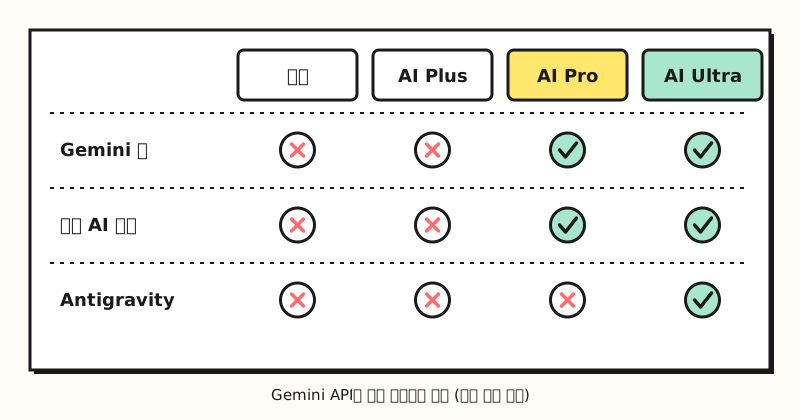 Where you can use Argon on each plan. Usage limits have not been published (figure labels in Korean).
So can you use it in Korea too? The Gemini app release notes say Argon is rolling out globally to Pro and Ultra subscribers, and South Korea is on the list of supported countries in the Google AI Pro sign-up help. So if you subscribe to Pro in Korea, it appears you should be able to use it in the Gemini app, but since it's a gradual rollout, the timing may vary from account to account. AI Mode in Search also lists South Korea and Korean among its supported countries and languages in the AI Mode help, but I couldn't find any document that separately covers Argon availability in AI Mode by country.
3. What Changed in the Gemini App?
The Gemini app announcement explains that even the way it answers has changed.
- More direct answers: It reportedly hedges less, repeats itself less than before, and uses fewer clichés.
- Progress updates: When you hand it a long task, it shares progress along the way more often.
- Switching from chat to tasks: With a single button in the chat window, you can switch to a "task," and Gemini keeps working in Google apps and elsewhere even when you're away from your computer.
- More than 40 connected apps: It connects with services such as Instacart, OpenTable, Adobe, and Shopify to get things done within a single conversation. However, according to the release notes, most connected apps are available in the US in English.
According to the tasks help, the tasks feature is only available on personal accounts of Google AI Pro and Ultra subscribers aged 18 or older, and work and school accounts aren't eligible yet. It's available in the mobile app, the Gemini app for Mac, and on the web (gemini.google.com), and Korea is not among the excluded regions (the European Economic Area, Nigeria, Switzerland, and the UK).
This change is easy to understand if you compare it to the difference between a help desk and a project manager. If chatbots so far have been help desks that answer on the spot when you ask a question, Argon in task mode is closer to a project manager who, once you hand over the work, gets on with it and checks in from time to time with "Here's where I've gotten to." The person delegating no longer has to stay by its side the whole time, but the role of receiving updates and correcting course still remains.
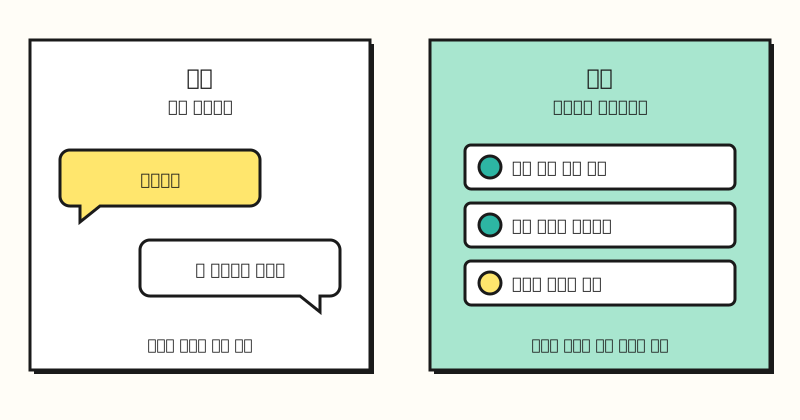 An analogy based on the Gemini app announcement's description of chat and tasks (figure labels in Korean).
The release notes also mention that you can manage app connections and skills in one place under Customize in the left menu. You can reportedly add recurring jobs as skills, such as writing in your own style or following a set format. The coding tool Antigravity has also come into the Gemini macOS app, but according to the release notes, it's available in English. I've covered the country and language requirements for connected apps separately in my post on Gemini Connected Apps, so please refer to that too.
4. What Could Marketers Try Using Gemini 4 Argon For?
The examples given in the release notes are analyzing complex financial reports, building presentations from scattered materials, and creating interactive 3D models. On top of that, the announcement says Argon follows style instructions better than previous Gemini models. Applying this to marketing work, the following tasks come to mind. These are my own ideas based on the official examples, so please adjust them to fit your work.
- Reading reports: Feed it a long, complex market report or performance data and ask it to pull out the key figures along with the pages they come from
- Drafting from collected materials: Feed it scattered materials such as meeting notes, campaign results, and reference articles, and have it create an outline and draft for a reporting deck
- Matching brand voice: Give it your brand tone guide and have it rewrite ad copy or product page copy in that tone
- Delegating long tasks: Hand off multi-step research or organizing work as a task and refine it as you receive progress updates
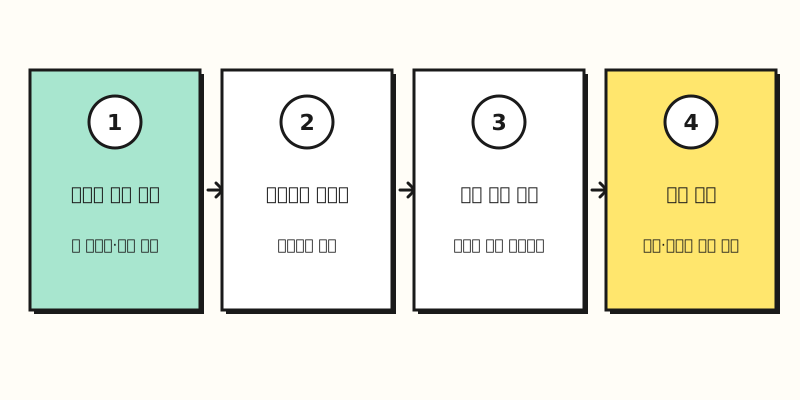 The parts a person should take care of when delegating a long task, laid out as steps (figure labels in Korean).
Whatever the model, the final check is up to a person. In particular, you need the habit of checking numbers and sources against the originals, so I also recommend reading how to reduce AI hallucinations.
Note: What to Check If You Use the API
If you want to use Argon through the Gemini API, look at the pricing and tier requirements first. Here are the standard-tier prices per million tokens listed in the pricing documentation.
| Period | Input | Output (including thinking tokens) | Cache |
|---|---|---|---|
| Through November 30, 2026 | $2 | $10 | $0.10 |
| From December 1, 2026 | $4 | $20 | $0.20 |
- Free tier excluded: The pricing documentation notes that Argon isn't available on the free tier or with the Google AI Pro plan, meaning that unlike in the Gemini app, a Pro subscription alone won't let you use it in the API. According to the developer announcement, the subscribers who can try it in AI Studio through their subscription are Ultra subscribers.
- Implicit caching only: For caching, which gives a discount when you repeatedly send the same opening content, only automatic (implicit) caching is supported.
- Batch discounts: The Batch and Flex tiers, which bundle non-urgent requests, cost half the standard price for both input and output.
- Adjustable thinking level: According to the model documentation, you can choose a thinking level of low, medium, or high.
To sum up, Gemini 4 Argon is Google's new top-tier model, and if you subscribe to Google AI Pro or higher, you can try it right away in the Gemini app. I'll try handing it some long document-organizing work as tasks and write up again how it compares with the previous models. For details, see the Gemini 4 Argon announcement and the model documentation.
FAQ
- Can I use Gemini 4 Argon for free?
- No. In the Gemini app and AI Mode in Search, only Google AI Pro and Ultra subscribers can use it, and the Gemini API doesn't offer it on the free tier either. Free users and Google AI Plus subscribers are not eligible.
- Is Gemini 4 Argon available in Korea?
- Google said it's rolling out globally to Pro and Ultra subscribers in the Gemini app, and South Korea is among the countries where Google AI Pro is supported. Since it's a gradual rollout, the timing may vary from account to account.
- How much does the Gemini 4 Argon API cost?
- On the standard tier, a launch price of $2 per million input tokens and $10 for output applies through November 30, 2026, and from December 1, $4 for input and $20 for output applies. The Batch and Flex tiers are half the standard price.
- What is the difference between chat and tasks in the Gemini app?
- Chat answers right away when you ask a question, while switching to a task lets Gemini keep working in Google apps and elsewhere even when you're away from your computer. Google said Argon shares progress updates more often on long tasks.
Related Posts
Posts that pair well with Gemini 4 Argon.
- Gemini Connected Apps: apps added in September and what's available in Korea - Country and language requirements to check when connecting outside services to the Gemini app
- What are tokens and context windows? Basics to know before feeding AI long documents - What a 1-million-token context and per-token pricing mean
- Claude Haiku 5.5 launch: pricing, differences from Sonnet 5.5, and when to use it - For comparing price and use cases with another company's models