Can You Hear My Thoughts...? Banner Ads
"Hmm, maybe I should redecorate?" I think, and an ad for a home decor shop pops up. Products from a brand I was browsing the other day keep following me around in ads. What's going on? Am I being wiretapped...? In a way that's right, and in a way it's wrong. By what mechanism do ads get shown to me? Why do they keep following me around?! Let's take a look at banner ads.
What Is a Banner Ad?!
Showing ads in image or video form to the audience you've targeted, through a network of partner ad placements.
So Why Run Banner Ads?
To spread awareness of your brand or product, and to bring back customers who left through retargeting.
- For awareness and traffic
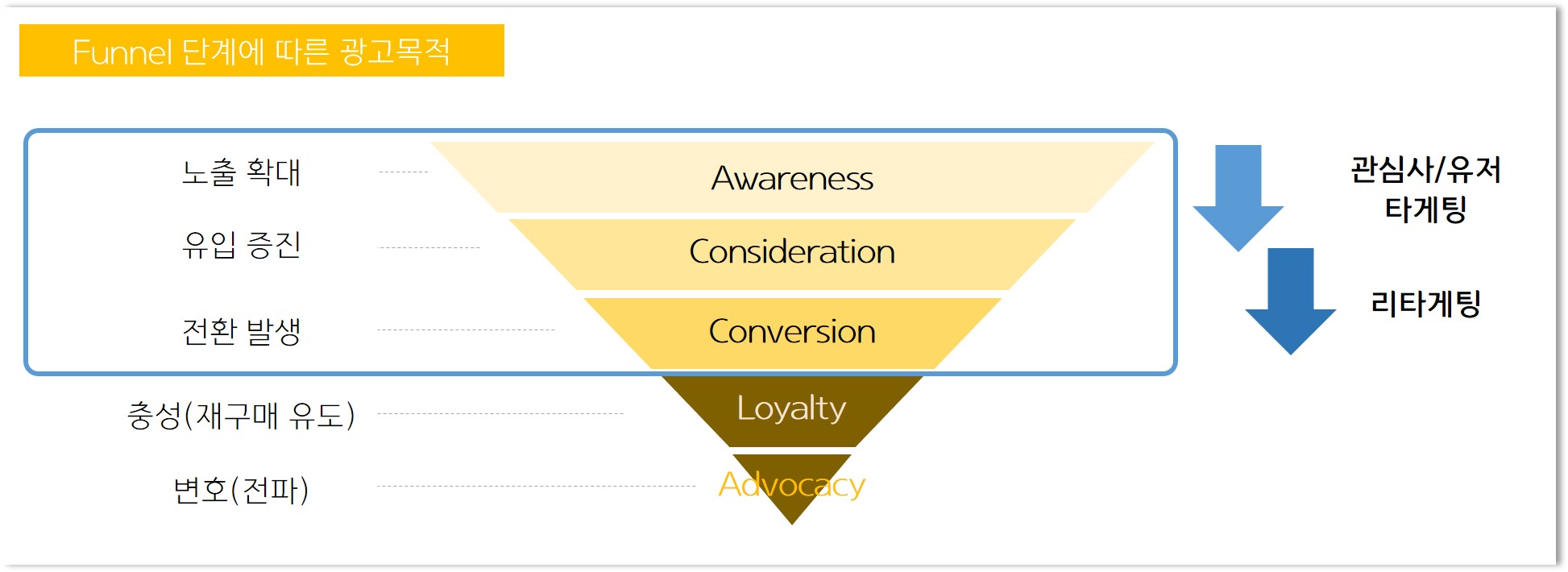
I can't help bringing up the funnel again today. In my last post, I said that search ads are a great channel for bringing in customers who are close to the conversion stage, but that it's hard to show them to customers who aren't yet aware of your brand or product. Building on that, you can see that to grow search traffic, other campaigns need to push traffic in from higher up the funnel, and one of those is banner ads.
With banner ads, targeting is based on things like interests or placement characteristics, so it's a bit broader than search ads, and the CPC (cost per click) also tends to be relatively lower than for search ads. That means you can show your ads to more potential customers at a lower price.
- For driving conversions
With retargeting ads (a targeting method that shows ads again to people who have already visited your site), you can show ads to users who have visited your site once before. So even though retargeting ads are banners, they can be campaigns run with the goal of generating conversions. For example, if a customer added a product to their cart but left without buying for some reason, you could show them a discount coupon ad to encourage them to come back and buy, right?
What Makes Banner Ads Distinctive
With banner ads, "targeting" is what matters. So what exactly is targeting?
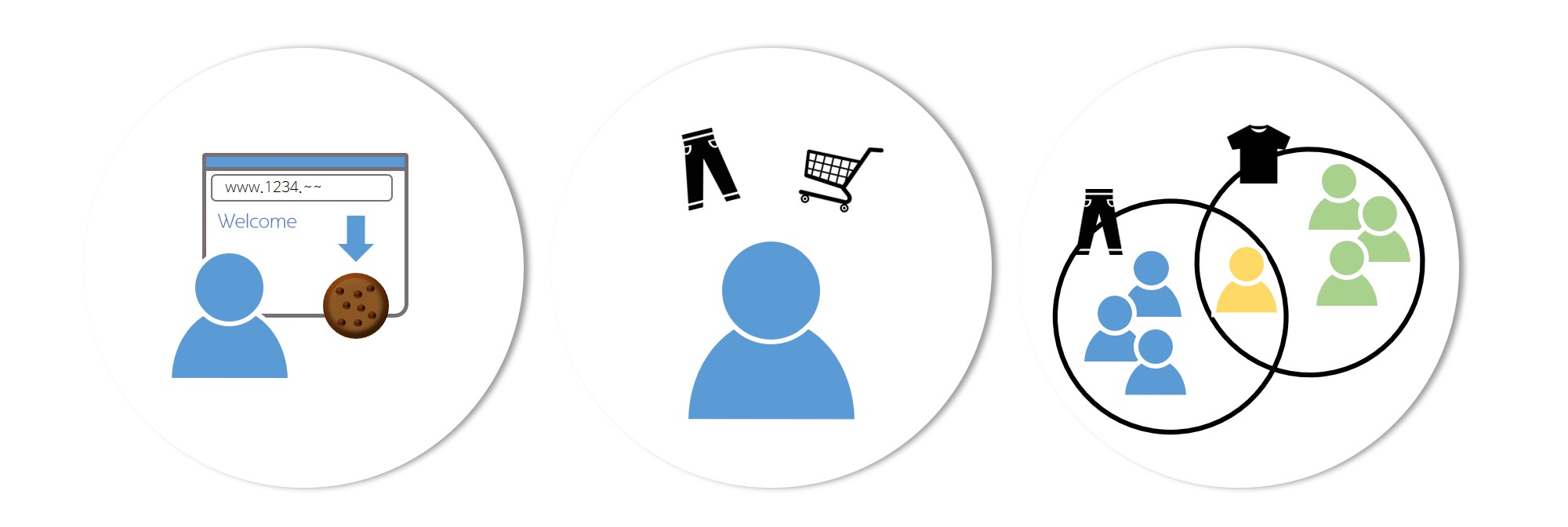
Everything we do on the web gets recorded. You've probably heard a lot about "cookies." A cookie is a small file that a website places on the user's computer when they visit it. Using cookies, a site can store information about how the user behaves. Based on what's recorded this way, DMPs and ad platforms get a rough picture of which areas and which products a user is interested in, based on their behavior. If they gather a pool of people who show similar characteristics based on these records and then target ads to them, users end up seeing ads that seem to read their minds.
Retargeting lets you target even more precisely based on each individual user's actual behavior. It starts with simply showing ads that bring people back to the site after they visited a specific page, and you can also show them the products they left in their cart again, or exclude people who have already bought the product from your target list (de-targeting). Going further, you can even run retargeting ads that show people who bought a certain product the items that many other buyers of that product also bought.
Thinking through this process, you can see that ad targeting is applied based on your own records on websites. So, flipping it around, what if you don't want to see a particular ad anymore? If you clear your browsing history, you can escape the ads that follow you around so relentlessly. But don't let your guard down. That space will just be filled by other ads.
Major Display Advertising Channels
There are a huge number of channels where you can run banner ads, and since each has different characteristics, it's important to choose the ones that fit your business's audience and goals. Let's look at the major ones one by one.
GDN (Google Display Network)
This is a platform that lets you show ads across more than 2 million websites and apps partnered with Google. It's also the first channel to consider if you're just getting started with display ads. It offers a wide range of targeting options, such as interests, topics, demographics, and custom intent, and a big advantage is that you can manage it together with search ads in Google Ads. Also, with responsive display ads, you only need to upload a few images and some text, and it automatically generates banners in a variety of sizes, so even small advertisers short on design resources can get started relatively easily.
Kakao Moment
This is a platform that lets you show ads on placements within the Kakao ecosystem, including KakaoTalk (Korea's dominant messaging app), Daum, and KakaoStory. Because KakaoTalk usage is so high in Korea, its coverage of domestic audiences is excellent. In particular, the KakaoTalk Bizboard appears at the top of the chat list, so it gets a lot of attention, and message-style ads are also possible, which lets you reach users in a friendly tone. If you install the Kakao Pixel, you can also retarget, and with Kakao Sync you can try targeting linked to your CRM data.
Meta Ads (Facebook/Instagram)
Strictly speaking, these are closer to social ads than display ads, but image and video ads shown in feeds, Stories, and Reels serve the role of banner ads perfectly well. The biggest strength of Meta ads is targeting precision. Because users leave their interest and behavior data directly on social media, interest-based targeting is very precise. On top of that, the Lookalike feature, which finds new users with characteristics similar to your existing customers, is really effective for acquiring new customers.
Criteo
This is a global advertising platform specialized in retargeting. It's widely used in commerce, and Criteo's core strength is dynamic retargeting, which automatically shows the products a user viewed on your site in banners. For example, if a customer looked at a pair of blue sneakers on your site, a banner featuring those sneakers is automatically shown to them as they browse other sites. As long as your product feed is set up well, it generates banners for thousands or tens of thousands of products automatically, with no need to make each one by hand, which makes it especially useful for e-commerce businesses with lots of products.
Key Metrics for Measuring Display Ad Performance
When you run display ads, you'll come across a wide range of metrics. Let me lay out which metrics to look at at each stage.
Impression stage
- CPM (Cost Per Mille): The cost per 1,000 impressions. It's an especially important metric for brand awareness campaigns and tells you how efficiently you showed your ad to a lot of people.
- Reach / Frequency: How many people your ad reached, and how many times on average each person saw it. If frequency gets too high, ad fatigue rises, so you need to keep it at an appropriate level.
Click stage
- CPC (Cost Per Click): The cost per click. Display ads tend to have a relatively lower CPC than search ads, but it's only meaningful when you look at it alongside CTR.
- CTR (Click Through Rate): Clicks as a share of impressions. Display ad CTR is generally lower than for search ads; it varies by industry, but the average is around 0.3–0.5%.
Conversion stage
- CPA (Cost Per Action): The cost per conversion. In retargeting campaigns, CPA becomes the key metric.
- ROAS (Return On Ad Spend): Revenue relative to ad spend. In commerce, it's the most intuitive metric for judging ad efficiency.
- View-through conversions: Cases where someone only saw the ad without clicking it but later converted on their own. Because the impression itself has a big influence with display ads, you need to look at view-through conversions too in order to understand the true effect of display.
How Will Display Advertising Change in a Cookieless World?
Earlier I explained cookie-based targeting, but with the recent push toward stronger privacy protection, restrictions on third-party cookies are becoming a reality. Apple has already blocked third-party cookies in Safari, and Google has announced that Chrome will also restrict cookie use in stages. So how will display ads be targeted without cookies going forward?
First-party data is becoming more important. When third-party cookies are blocked, the data you collect directly on your own site becomes even more valuable. This means targeting based on data customers have voluntarily provided, such as login information, purchase history, and newsletter subscriptions. Because of this, strategies for encouraging sign-ups on your own online store and building up CRM data have become far more important in marketing than before.
Contextual targeting is getting attention again. Instead of a user's past behavior, this approach shows ads that match the content and context of the page where the ad appears. For example, showing an airline ticket ad to a user reading a travel blog post. It's an approach that existed before too, but advances in AI have made it possible to analyze page context much more precisely, greatly increasing its accuracy.
Google's Privacy Sandbox is also worth watching. Alternatives such as the Topics API, which shows ads to groups with similar interests without identifying individuals, are being proposed. It isn't fully established yet, but it's clear that the entire ad industry is moving in this direction.
In conclusion, even if cookies disappear, banner advertising itself isn't going away. What changes is how targeting is done, and building a system for accumulating and using your own data, starting now, will be the key factor that determines display ad performance going forward.
FAQ
- What is the difference between display ads (DA) and search ads (SA)?
- Search ads (SA) appear when a user searches for a keyword, so they target customers who already have purchase intent. Display ads (DA), on the other hand, appear in image or video form on websites and apps, so they can introduce your brand even to potential customers who haven't searched yet. SA is strongest for conversions, while DA is strongest for expanding awareness and retargeting.
- How much budget should I start with for retargeting ads?
- Because retargeting only targets users who have already visited your site, you first need a large enough pool of site visitors. Generally, you can start retargeting once you have 100 or more visitors a day, and I recommend testing with a daily budget starting from around 10,000–30,000 KRW.
- Which channel is best if I'm just starting with display ads?
- If you're new, I recommend GDN (Google Display Network). You can manage search and display ads together in Google Ads alone, and there are plenty of targeting options and references. If domestic coverage in Korea matters most, Kakao Moment is also a good choice.
- My display ad CTR is very low. Is that normal?
- The average CTR for display ads is around 0.3–0.5%, so it's normal for it to be much lower than for search ads (an average of 3–5%). Display ads are often aimed at impressions and awareness rather than clicks, so rather than judging performance by CTR alone, it's better to also look at view-through conversions and changes in branded search volume.
Posts to read alongside this one: